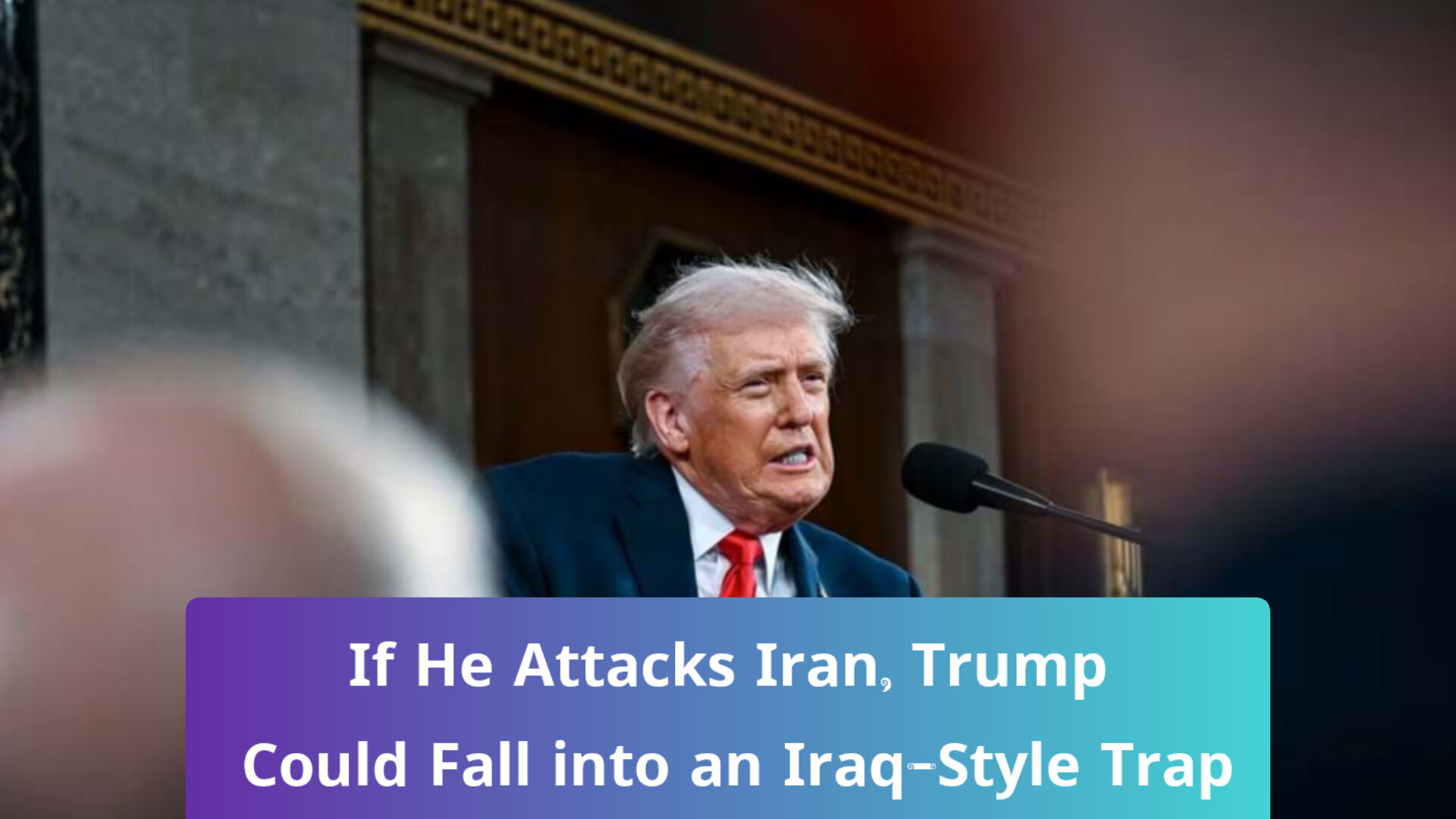
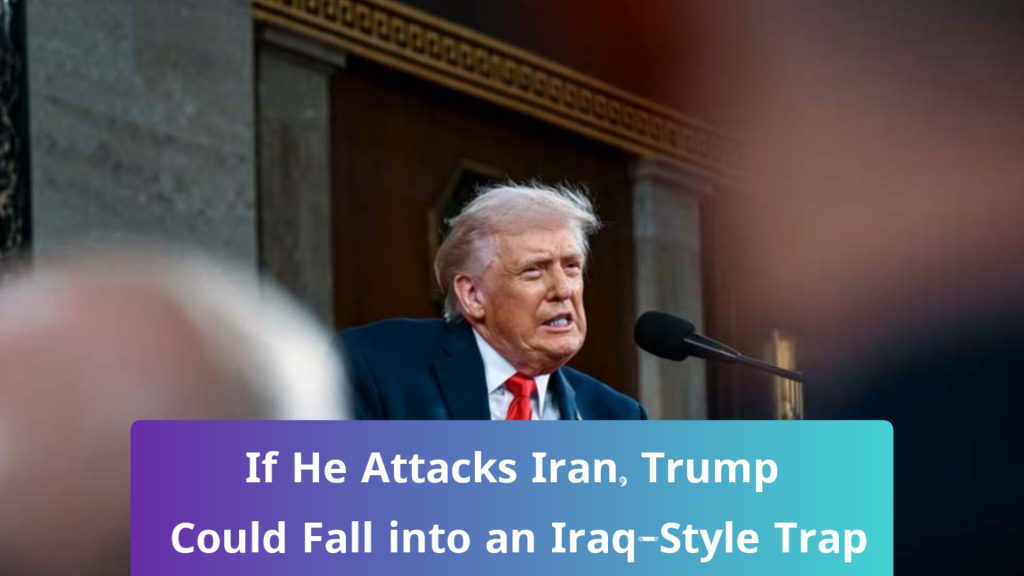
Public trust in the American establishment was severely shaken in the aftermath of the Iraq War. Had that not happened, Donald Trump might never have become President of the United States.
That is why it is somewhat ironic that he now appears to be imitating the same rhetorical positions and strategic mistakes that pushed President George W. Bush toward disaster in the Middle East after 2003.
Read more
According to reports, Trump has not yet made a final decision on whether to strike Iran. However, the massive presence of U.S. naval and air forces in the region is the largest military buildup since the invasion of Iraq that toppled Saddam Hussein. This could serve as additional pressure to force Iran to retreat in the crisis talks set to resume Thursday (February 26) in Geneva. But without a major diplomatic success, bringing such a large force home without firing a single shot could damage Trump’s prestige.
The Trump administration was built on the “MAGA” movement — one that strongly opposes foreign wars. Perhaps that is why it has so far failed to present a coherent justification for the war it is threatening.
The downside of this approach, however, is that while the U.S. military may be ready for war, the American public is not.
Before invading Iraq, Bush spent months building public support for war — even though it was based on flawed intelligence and false premises. In contrast, the Trump administration has so far offered only vague and confusing justifications.
In his State of the Union address Tuesday night, Trump attempted to provide some clarity, though it may have cornered him further.
Like traditional presidents, he warned that Iran must never be allowed to build a nuclear bomb. But this raised questions about his intent and credibility, since last year he claimed to have “eliminated” Tehran’s nuclear program. Trump also cited the deaths of hundreds of American soldiers at the hands of Iran-backed proxy forces in Iraq and condemned the recent brutal crackdown on Iranian protesters, which may have killed thousands of civilians.
Missile Puzzle
History echoes most loudly when Trump turns to Iran’s ballistic missiles. He claimed they already possess missiles capable of threatening Europe and U.S. bases abroad and are developing ones that could soon reach the United States.
He may be exaggerating Iran’s capabilities. But by emphasizing a threat to the homeland, he is following the controversial path taken by the Bush administration and British Prime Minister Tony Blair to justify the Iraq War.
Secretary of State Marco Rubio echoed similar warnings Wednesday, stating that Iran is steadily increasing missile range and could eventually develop weapons capable of striking the U.S. mainland.
All of this feels very familiar.
In 2002, Bush warned that American civilians in Saudi Arabia, Israel, Turkey, and elsewhere were at risk from Iraqi missiles. Vice President Dick Cheney also cautioned that Iraq was developing delivery systems that could ultimately threaten the United States with nuclear blackmail.
Fear of missiles was not the only factor behind the Iraq War. One of the Bush administration’s greatest failures was its lack of planning for the post-war situation, which led to sectarian divisions and insurgency.
Iran is likely far stronger than Iraq. Yet Trump has not clearly explained what might happen if U.S. military action were to topple Iran’s religious regime.
Joint Chiefs Chairman General Dan Caine reportedly cannot predict the consequences of regime change in Tehran. U.S. intelligence suggests the most likely successor would be the hardline Islamic Revolutionary Guard Corps — meaning removing the clerics might simply replace them with an equally hostile alternative.
Washington has often stumbled due to misjudging its adversaries. Its logic tends to dissolve in the Middle East’s complex realities.
Even Trump once warned in Saudi Arabia that interventionists in the Iraq War meddled in societies they did not understand.
Now, U.S. envoy Steve Witkoff says Trump is puzzled as to why Iran has not yet capitulated despite overwhelming pressure.
Read more
One possible reason is Iran’s observation of Libya’s Muammar Gaddafi — who lacked weapons of mass destruction yet met a brutal end. That may explain why Iran sees such weapons as a survival guarantee.
As in 2003, arrogance remains a danger.
The Iraq War was expected to be easy, with U.S. troops welcomed as liberators. Today, despite warnings about complexity, Trump has portrayed a potential Iran conflict as easily winnable.
Diplomacy, however, is not over. Witkoff and Jared Kushner are expected to lead talks with Iranian officials mediated by Oman.
Iran has hinted at reducing uranium enrichment or stockpiles, but missile issues remain a major obstacle.
Trump also faces domestic political limits. He cannot accept a deal resembling the Obama-era agreement he once rejected.
Still, any outcome that preserves Iran’s regime would likely be seen as a victory in Tehran.
That is why military action may appear tempting — despite the risks of American casualties and civilian losses.
If the U.S. ever seeks to strike its longstanding adversary, now may seem the moment — with Iran’s regional networks weakened and internal instability rising.
Eliminating Iran’s missile and nuclear programs could reshape the Middle East and spark economic growth.
Trump hopes to be remembered as the president who toppled the Ayatollahs — an achievement that eluded Jimmy Carter, Ronald Reagan, George H.W. Bush, Bill Clinton, George W. Bush, Barack Obama, and Joe Biden.
For a commander eager to leave his mark on history, it would be a monumental legacy.
.