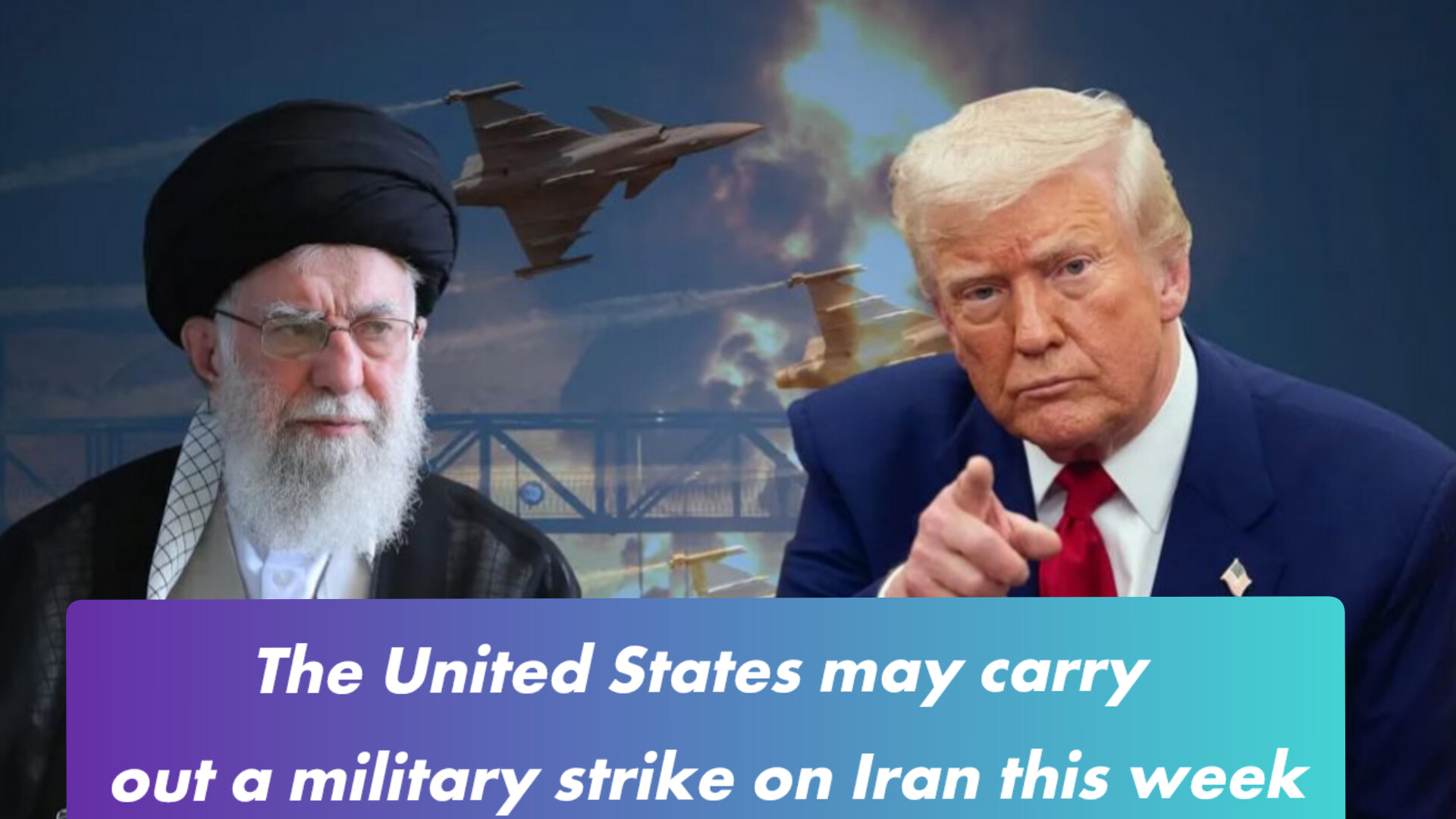
The United States military could be prepared to launch a strike against Iran as early as the end of this week, although President Donald Trump has not yet made a final decision on whether to proceed, according to multiple sources who spoke to CNN. The development comes amid heightened tensions in the Middle East and follows a significant buildup of American air and naval forces in the region in recent days.
Sources familiar with the matter said the White House has been informed that, after the recent deployment of additional aircraft and naval assets, U.S. forces could be in a position to carry out military action by the weekend if ordered to do so. The preparations are described as precautionary, intended to ensure readiness should the President choose to authorize a strike. However, Trump is said to be carefully weighing arguments both in favor of and against military action.
According to officials, the President is consulting closely with his top national security advisers as well as key political allies. While some advisers argue that a strong show of force could deter further escalation and demonstrate American resolve, others caution that military action could trigger a broader regional conflict, destabilize already fragile alliances, and undermine ongoing diplomatic efforts.
On Wednesday, senior national security officials convened in the White House Situation Room to assess the latest intelligence and strategic options. The high-level meeting focused on evaluating potential scenarios, risks, and consequences of various courses of action. The same day, Special Envoy Steve Witkoff and Trump’s son-in-law Jared Kushner briefed the President on indirect discussions that have been taking place with Iranian representatives.
Those diplomatic contacts included a lengthy round of indirect talks held Tuesday in Geneva. According to officials, U.S. and Iranian representatives exchanged written notes for approximately three and a half hours. Although the meeting did not produce a final agreement or breakthrough, both sides reportedly described the discussions as constructive. Iran’s chief negotiator stated that the two parties had reached an understanding on what he called a “guiding framework” for future discussions. However, a U.S. official cautioned that many detailed and sensitive issues remain unresolved, and significant gaps persist between the two sides.
White House Press Secretary Karoline Leavitt emphasized that diplomacy remains President Trump’s preferred approach. She noted that the administration continues to explore a negotiated solution and is giving diplomatic channels an opportunity to succeed. Nevertheless, she made clear that military options remain on the table should talks fail or should circumstances escalate further.
The situation underscores the delicate balance facing the administration. On one hand, there is pressure to respond firmly to perceived threats and maintain U.S. influence in the region. On the other, there is recognition of the potential consequences of military engagement, including the risk of retaliation, disruption to global energy markets, and broader geopolitical instability.
As of now, it remains unclear whether a final decision will be made by the weekend. Officials stress that while military readiness has increased, no order has been given. The coming days are likely to be critical as diplomatic efforts continue alongside military preparations. Whether the crisis moves toward confrontation or de-escalation will depend largely on the outcome of ongoing discussions and the strategic calculations made in Washington.