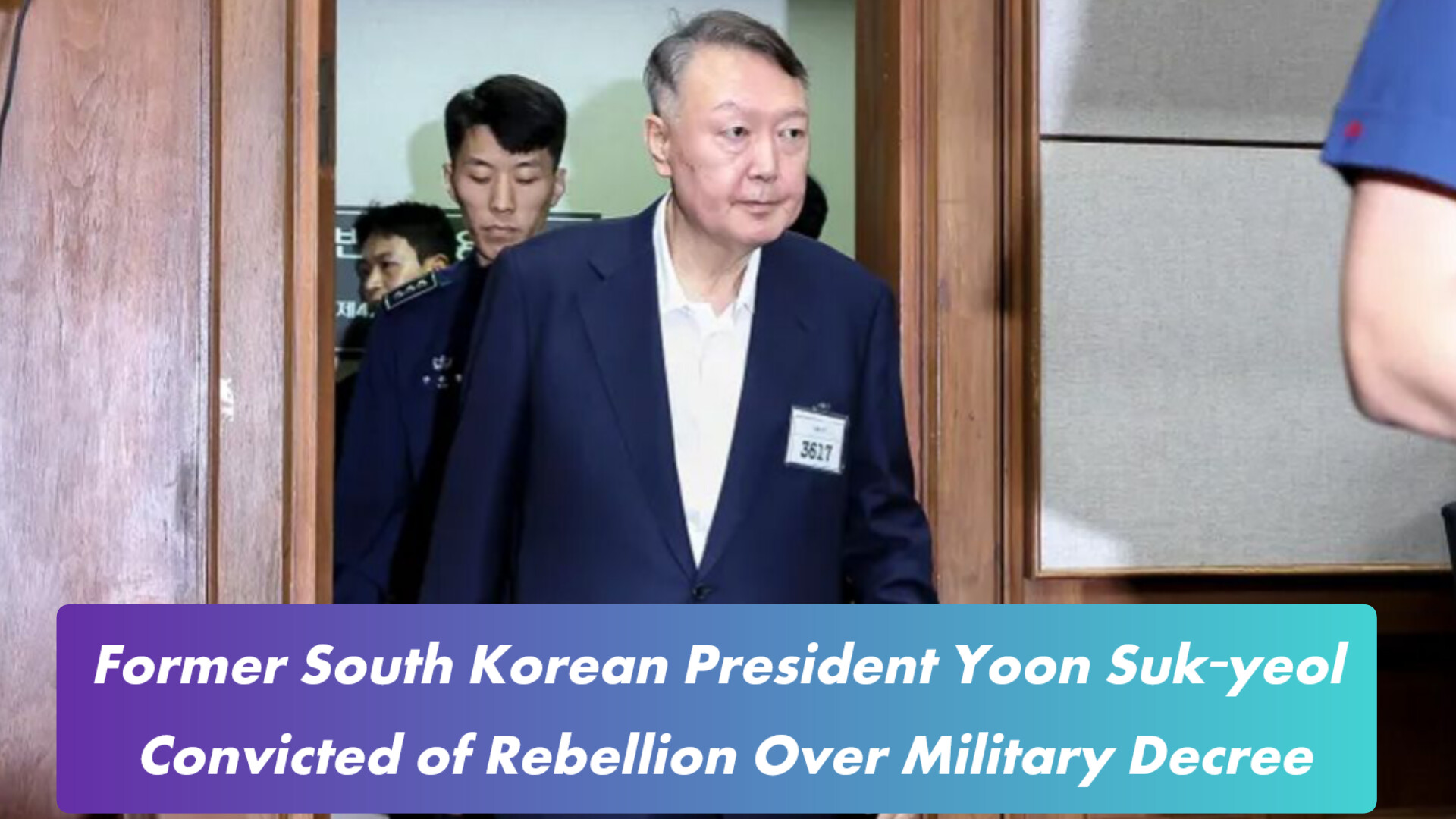
In a landmark verdict that has sent shockwaves through South Korea’s political landscape, former President Yoon Suk-yeol has been found guilty of rebellion by the Seoul Central District Court. The ruling centers on the controversial military decree that Yoon issued in December 2024, a move that has been widely debated for its constitutional implications and political consequences.
On Thursday, the court formally announced its decision, concluding that Yoon led a rebellion on December 3, 2024. Prosecutors had initially sought the death penalty for the former leader, citing the severity of the offense. Following the ruling, Yoon has been officially impeached and removed from the presidential office, marking a historic moment in South Korea’s modern political history.
According to the South Korean news agency Yonhap, the primary issue in the case revolved around Yoon’s deployment of military forces to the National Assembly. The court stated that Yoon’s actions were aimed at paralyzing the legislative body’s functioning over an extended period. By doing so, he attempted to disrupt the normal operations of parliament, undermining the democratic process and checks and balances fundamental to South Korea’s government.
Yoon, who is 65 years old, has consistently claimed his innocence throughout the proceedings. In court, he argued that the issuance of the military decree fell within his constitutional authority as president. He maintained that opposition parties were actively obstructing government operations, creating a political deadlock that threatened the country’s governance. According to his defense, the controversial decree was a necessary measure to maintain order and ensure governmental continuity in the face of legislative obstruction.
Despite Yoon’s claims, the court determined that his actions went beyond the constitutional limits of presidential power. The ruling emphasized that deploying the military against the legislative branch constituted a grave breach of democratic principles and national law. Legal experts note that this conviction is unprecedented in South Korea, highlighting the judiciary’s role in holding even the highest office accountable under the law.
The conviction of Yoon Suk-yeol is expected to have profound political ramifications. Analysts suggest that this decision could deepen divisions among South Korea’s political parties and fuel public debate over the balance of power between the executive and legislative branches. Many observers also point out that the verdict underscores the resilience of South Korea’s democratic institutions in the face of high-level political crises.
Historically, South Korea has seen moments of tension between civilian governments and the military, but the direct involvement of a sitting president in deploying military forces against parliament is virtually unprecedented. As such, the court’s decision is being closely scrutinized both domestically and internationally. Experts suggest that the ruling may set a lasting precedent regarding the limits of presidential authority and the proper use of military power in democratic nations.
The political fallout from this case is likely to influence upcoming elections, public opinion, and policy-making for years to come. Citizens, political leaders, and international observers are now closely monitoring how the government and Yoon’s political allies respond to the verdict. The ruling represents not only a personal defeat for Yoon Suk-yeol but also a broader reaffirmation of South Korea’s democratic principles and the importance of legal accountability at the highest levels of power.
With tensions running high and debates ongoing, South Korea faces a pivotal moment in its democratic journey. The conviction of a former president for rebellion, based on actions surrounding a military decree, will remain a significant chapter in the nation’s political history.