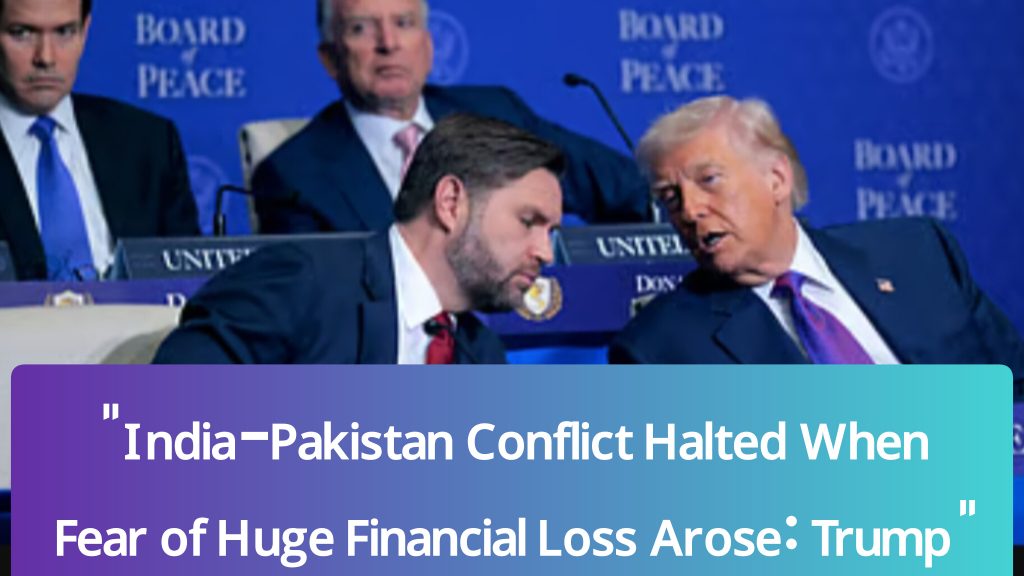
Former U.S. President Donald Trump has once again claimed that he played a key role in averting a major conflict between India and Pakistan in May 2025. According to Trump, the two nuclear-armed neighbors were on the brink of a full-scale war, and he intervened to prevent it. He further asserted that if the conflict had continued, he would have imposed a 200% tariff on both countries. Trump also stated that during the hostilities, “11 warplanes were destroyed,” marking a significant escalation in the tensions.
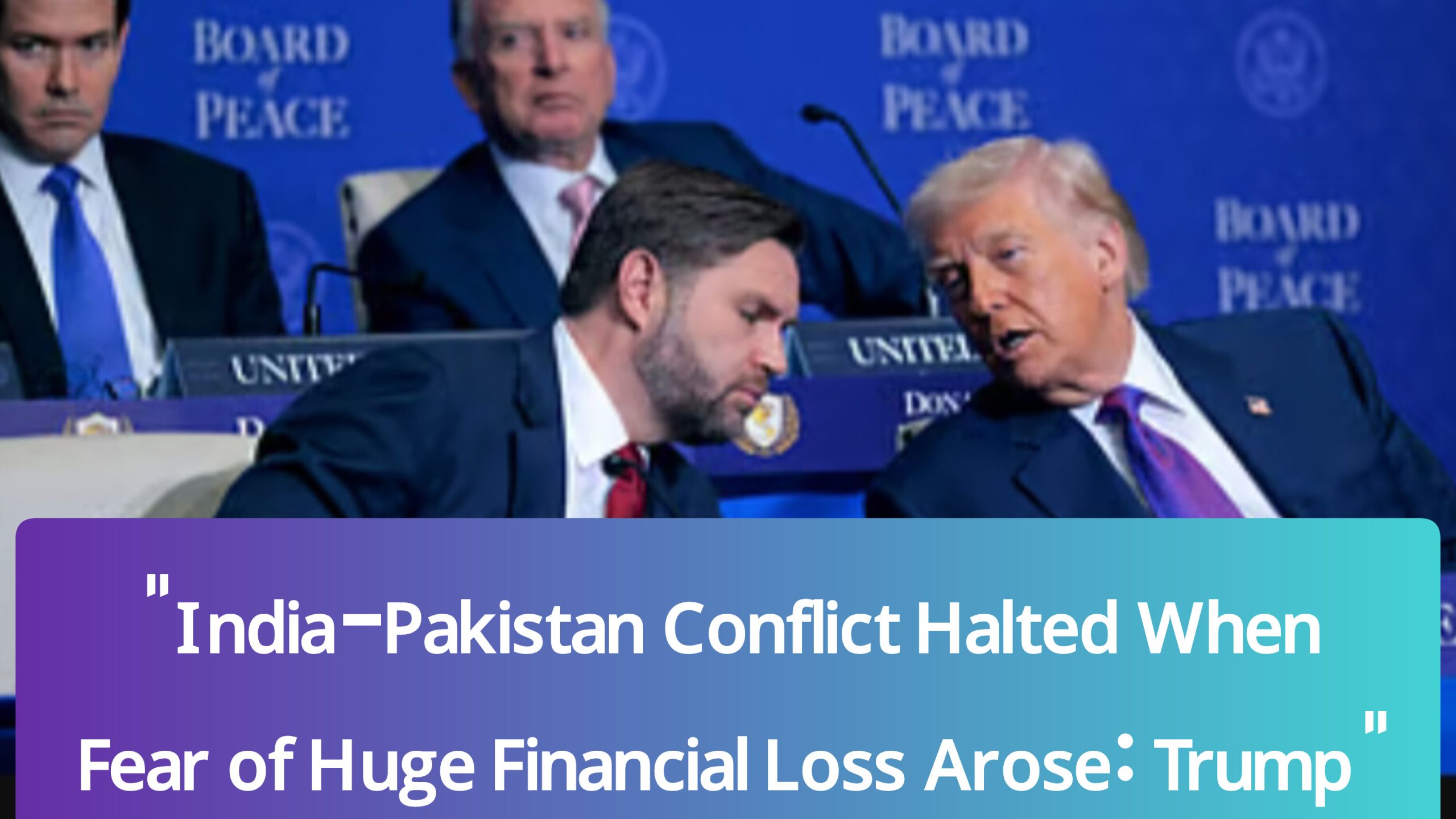
Trump made these remarks while addressing a meeting of the Board of Peace, a platform where global leaders discuss conflict resolution and international diplomacy. In his speech, he claimed that both India and Pakistan were ready to fight. However, he said that when financial stakes and potential economic losses were taken into account, both nations decided to halt their military operations.
India, however, has consistently denied that any third-party intervention, including that of the United States, played a role in stopping the conflict. Despite this, Trump emphasized his personal role in brokering peace, presenting it as a diplomatic achievement during his tenure.
The peace board meeting was attended by leaders from various countries, including Pakistan’s Prime Minister Shahbaz Sharif. Addressing Sharif, Trump remarked, “Pakistan and India. That was a very big issue. I think you should actually stand up for a second, please. Pakistan and India. Thank you very much.” He used this moment to highlight his “mediation skills,” claiming that his intervention had directly saved lives.
Trump further stated that Prime Minister Sharif had told him that he had prevented the deaths of 25 million people by brokering a ceasefire. Looking at Sharif, Trump said, “You made this comment. I said 25 million lives, but it could have been far more. But it was really incredible at that time… the war was ongoing. Warplanes were being destroyed, and fighting continued between India and Pakistan.”
According to Trump, his approach involved leveraging U.S. trade policies as a tool to force the two countries to come to the negotiation table. He explained, “I called both leaders. I know Prime Minister Modi very well. I called them and told them, ‘Listen, if you do not resolve this problem, I will not sign any trade deal with you.’ And suddenly, we reached a resolution.”
Trump reiterated that he threatened a 200% tariff if hostilities continued. He claimed that both India and Pakistan initially wanted to continue the fight but backed down when faced with the potential economic consequences, saying, “Both wanted to fight. But when it came to money—there’s nothing bigger than money. When the fear of huge financial loss came, they said, ‘We no longer want to fight.’ Eleven warplanes were destroyed, very expensive planes.”
This is not the first time Trump has made such claims. Earlier, he stated that 10 warplanes had been destroyed during the conflict. Over the past year, he has repeatedly highlighted that during the first year of his hypothetical second term, he had successfully prevented multiple wars, including India-Pakistan conflicts. According to Trump, from May 10 last year, he has stopped over 80 potential India-Pakistan confrontations, leading to a “full and immediate” ceasefire with U.S. involvement.
The recent escalation between India and Pakistan began after a militant attack in Pahalgam, Indian-administered Kashmir, on April 22, 2025, which left 26 civilians dead. India accused Pakistan-backed militants of carrying out the attack and launched retaliatory strikes on May 7. Pakistan responded with counterattacks, leading to heightened military tension between the two nations.
Trump’s narrative positions him as a central figure in preventing a large-scale regional war, emphasizing his use of economic pressure and personal diplomacy as tools to save millions of lives and avert further military destruction. While the claims have sparked debate and skepticism, they reinforce his portrayal of himself as a decisive peacemaker on the international stage.