
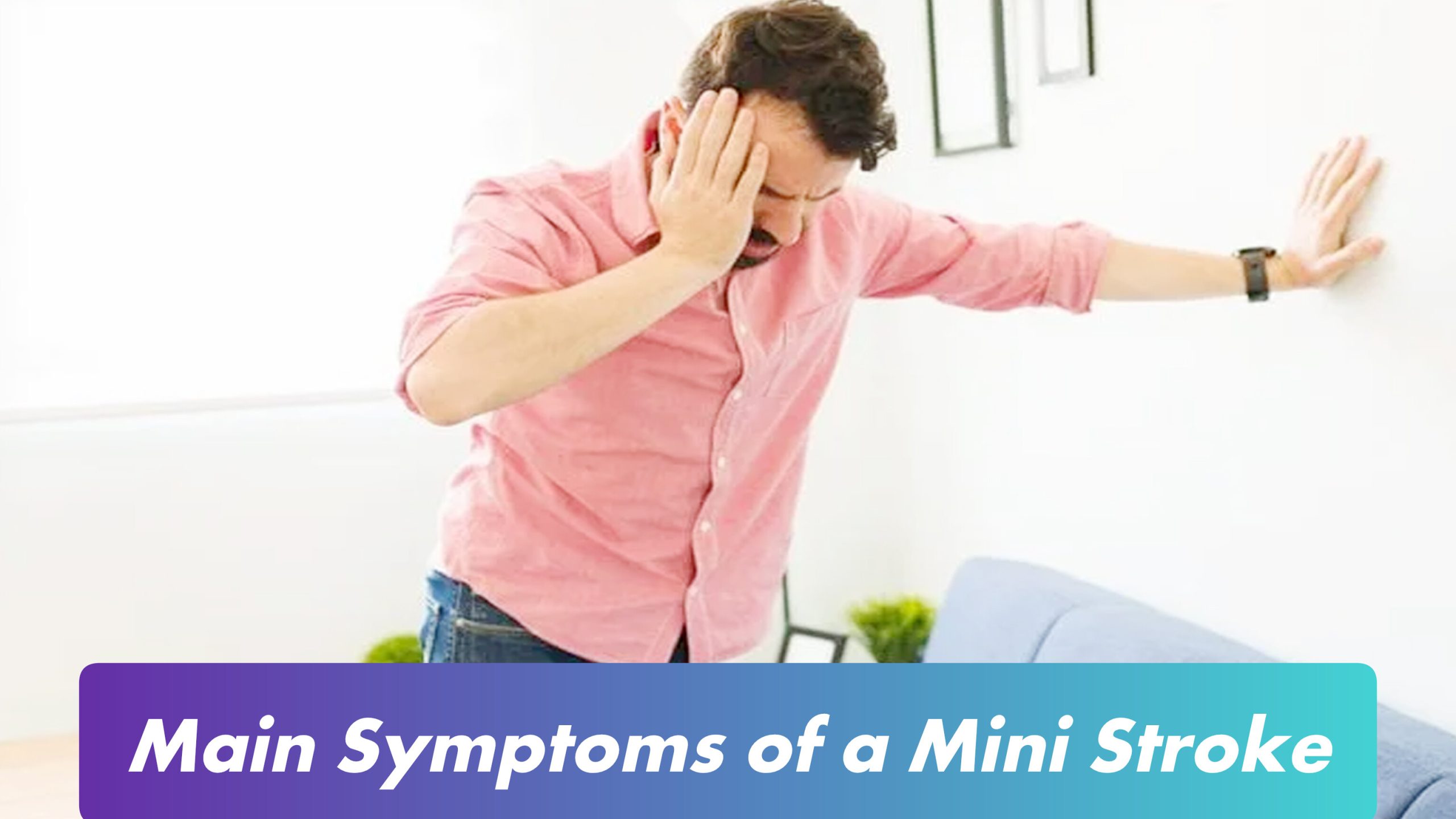
A mini stroke, medically known as a Transient Ischemic Attack (TIA), occurs when the blood supply to a part of the brain is temporarily blocked. Although the blockage is brief and usually does not cause permanent brain damage, it should never be ignored. A mini stroke is often a serious warning sign that a major stroke may occur in the near future.
Recognizing the main symptoms early can help prevent life-threatening complications and ensure timely medical treatment.One of the most common symptoms of a mini stroke is sudden facial drooping. A person may notice that one side of their face looks uneven or begins to sag. When asked to smile, the smile may appear crooked. This happens because the nerves controlling facial muscles are affected by reduced blood flow to the brain.Another major symptom is weakness or numbness in one side of the body. This usually affects the arm, leg, or both on the same side. The person may suddenly find it difficult to lift one arm or may feel that their limb is heavy or unresponsive. This weakness often appears without warning and can be alarming.Speech difficulties are also a key sign of a mini stroke. A person may start slurring their words, speaking unclearly, or struggling to form complete sentences. In some cases, they may understand what others are saying but cannot respond properly.
Alternatively, they may have trouble understanding speech altogether. These language problems occur because the areas of the brain responsible for communication are temporarily affected.Vision problems can also develop suddenly. A person might experience blurred vision, double vision, or temporary loss of sight in one or both eyes. Sometimes vision may go dark for a few seconds or minutes. Any sudden change in vision should be treated as a medical emergency.Dizziness and loss of balance are other possible symptoms. A person may feel lightheaded, unsteady, or have difficulty walking. They may lose coordination and struggle to maintain balance.
These symptoms occur when the parts of the brain responsible for movement and stability are affected.In some cases, a mini stroke may cause a sudden and severe headache. Although headaches are more commonly associated with major strokes, they can also appear during a TIA. The headache may come on quickly and feel different from previous headaches the person has experienced.It is important to note that the symptoms of a mini stroke typically last from a few minutes to about one hour. However, in some cases, they can continue for up to 24 hours before completely disappearing. Even if the symptoms resolve on their own, immediate medical attention is essential.
A mini stroke indicates that there is a problem with blood flow to the brain, and without treatment, the risk of a full stroke significantly increases.Doctors often use the acronym FAST to remember the warning signs: Face drooping, Arm weakness, Speech difficulty, and Time to call emergency services. Acting quickly can save lives and reduce long-term damage.In conclusion, the main symptoms of a mini stroke include facial drooping, weakness on one side of the body, speech difficulties, vision problems, dizziness, balance issues, and sometimes sudden severe headache. Although the symptoms may be temporary, the danger is real. Anyone experiencing these signs should seek immediate medical care to prevent a major stroke and protect their long-term health.